The style of dropshipping we run is called “Amazon to eBay.” It pairs two of the biggest names in online shopping, and when it's run properly it's one of the most dependable versions of the model. Here's exactly how it works, why it works, and the parts that quietly make or break it.
Two marketplaces, two different strengths
eBay and Amazon are both enormous, but people use them differently. eBay has a massive base of buyers actively searching for specific products and deals. Amazon has one of the world's largest, best-stocked catalogues with fast, reliable shipping.
Amazon-to-eBay simply bridges those two strengths: you sell to eBay's shoppers, and you fulfil their orders using Amazon's catalogue and logistics. You get eBay's demand and Amazon's supply chain in one model.
How a single sale actually flows
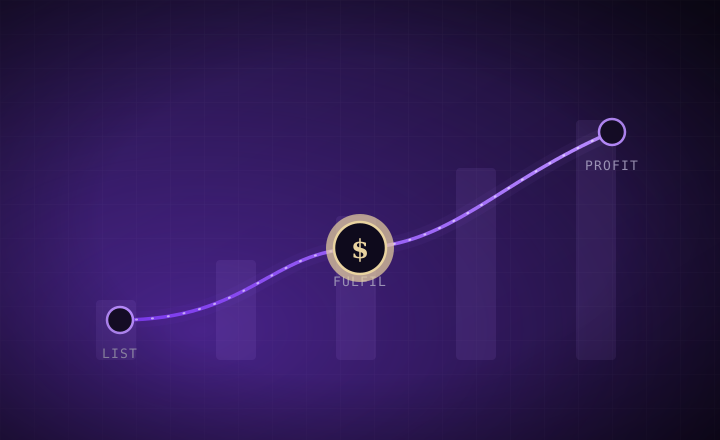
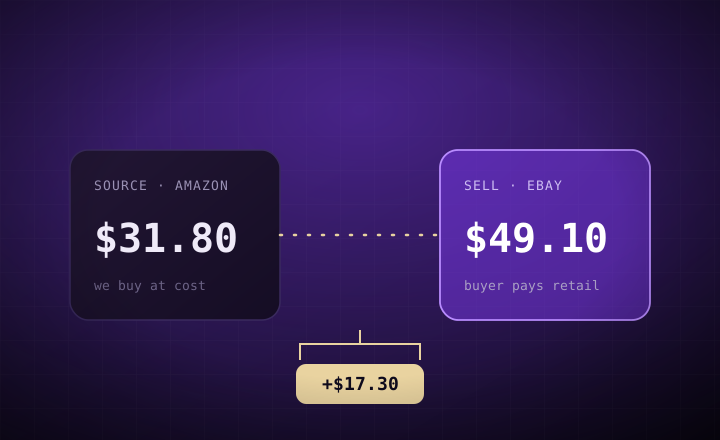
A product is listed on your eBay store at a price that leaves a healthy margin. A shopper buys it on eBay and pays you in full. That exact item is then purchased on Amazon and shipped directly to your eBay buyer, with tracking uploaded back to eBay automatically.
Your profit is the difference between what the buyer paid on eBay and what the item cost on Amazon, after eBay's fees. The customer gets their product on time; you keep the margin.
You're never out of pocket on stock: the eBay buyer pays you first, then that money funds the Amazon order.
Why the margin exists at all
A fair question: if the item is on Amazon, why would anyone pay more on eBay? Because eBay shoppers are shopping on eBay. They're not price-checking every item against Amazon — they're searching eBay, comparing eBay listings, and buying from the one that ranks well and looks trustworthy.
Good listing optimization captures that sale at a markup, while Amazon quietly handles the delivery in the background. The convenience and the search placement are what you're really being paid for.
What makes it hard to do alone
This is where most solo attempts come undone. Four things are constantly moving, and getting any of them wrong is costly:
- Prices change — if Amazon's price jumps and your eBay price doesn't, your profit evaporates or you sell at a loss.
- Items go out of stock — sell something that's no longer available and you've got a cancellation, a refund, and a hit to your account.
- Accounts need protecting — marketplaces watch for patterns that look automated or risky.
- Customers expect answers — slow or missing support drags down your store's rating.
How the model is run properly
Doing it well is a systems game, not a hustle. A properly run Amazon-to-eBay store has: real product research, listings optimized for eBay's search, automatic repricing that tracks Amazon's prices, round-the-clock stock monitoring that pulls anything that goes unavailable, account protection, and fast customer service.
When all of that runs together, the model becomes genuinely reliable — and genuinely hands-off for the store's owner. That's the entire reason a managed service exists: to run the hard parts so the margin actually lands in your pocket.
The difference between a store that prints money and one that gets shut down is almost never the products — it's the systems behind them.
Is it legitimate?
It's a real, fully-operated retail business: real products, real fulfilment, real customer service, in a store that's genuinely yours. The work that goes into running it well — sourcing, pricing, support, and protecting the account's standing — is exactly what keeps it healthy and sustainable rather than a quick flip that flames out.
Key takeaways
- Amazon-to-eBay = sell to eBay's buyers, fulfil from Amazon's catalogue.
- The eBay buyer pays first, so the model never needs your savings to float stock.
- Margin comes from eBay search placement and convenience, not from fooling anyone.
- Prices, stock, accounts, and support all move constantly — that's the hard part.
- Run with the right systems, it's reliable and hands-off; run by hand, it's fragile.
The store runs. You relax.
We do everything; you collect your share and 100% of the cashback.
Request info