“Dropshipping” gets thrown around constantly online, usually buried in hype and screenshots of someone's bank balance. Strip all of that away and it's a genuinely simple, decades-old retail idea. This guide explains it properly — what it is, how a sale really works, where the profit comes from, and the honest reasons most people who try it quit.
The traditional way to sell online
For most of retail history, selling a product meant owning it first. You'd forecast demand, buy a batch of stock with your own money, store it somewhere, and then ship each unit out as orders came in.
That model works, but it carries three real costs that have nothing to do with whether your products are good: cash tied up in inventory, somewhere to keep it, and the risk that some of what you bought never sells. Guess wrong on demand and you're sitting on boxes you paid for.
How dropshipping flips that
Dropshipping removes the inventory entirely. You list products for sale that you don't own yet. When a customer actually buys one, you place an order with a supplier for that single item, and the supplier ships it directly to your customer.
You never hold stock, never pack a box, and never spend a cent on a product until it has already been sold and paid for. The biggest financial risk in retail — unsold inventory — effectively disappears.
The core idea in one line: you only ever buy a product after your customer has already bought it from you.
Where your profit actually comes from
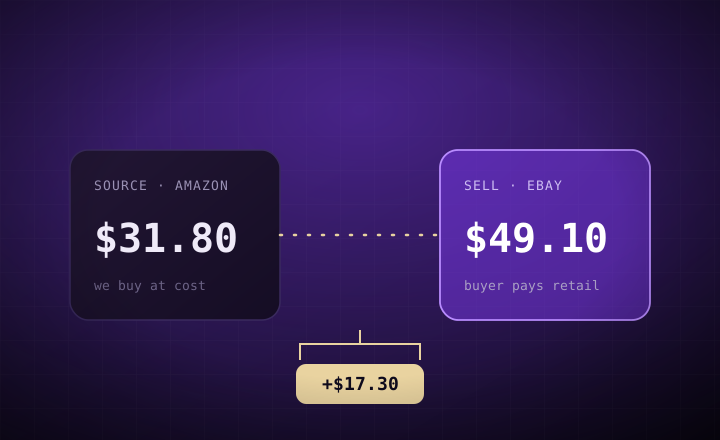
You list each item at a higher price than the supplier charges. When it sells, you collect the customer's full payment, pay the supplier their lower price, and keep the difference — minus the marketplace's selling fees.
A quick example: you list a product for $40. A customer buys it. You order the same item from your supplier for $26 and have it shipped to them. After roughly $6 in marketplace fees, you've made about $8 on that sale. Do that across hundreds of orders a month and it adds up.
The order, step by step
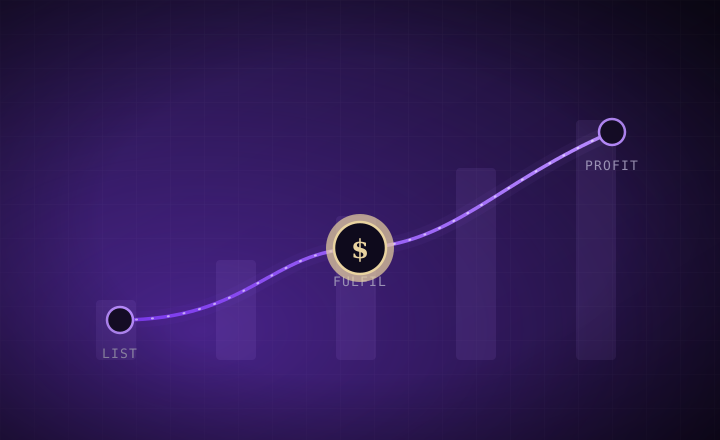
- A shopper finds your listing and buys the product — they pay you in full.
- You (or a service running your store) place that exact order with the supplier.
- The supplier ships it straight to your customer, often with tracking.
- You keep the gap between what the customer paid and what the item cost you.
Why people are drawn to it
The appeal is obvious once you see the mechanics. There's no inventory to buy upfront, no warehouse or garage full of boxes, very low starting risk, and the whole thing runs online. Compared to opening a traditional shop, the barrier to entry is tiny.
The honest catch nobody mentions in the hype
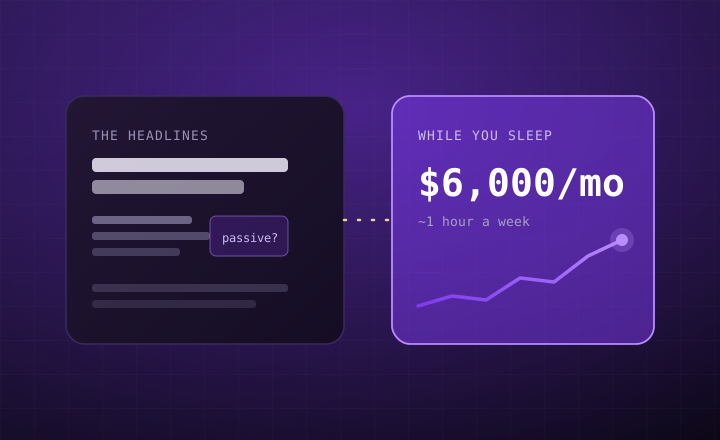
Here's the part the “get rich quick” posts skip: done casually, dropshipping almost always fails. The mechanics are simple, but doing it well is a real operation.
You have to research products that genuinely sell, price them so there's margin after fees, watch your suppliers so you never sell something that's gone out of stock, adjust prices as the supplier's prices move, protect your marketplace account, and answer customers quickly when something goes wrong. Drop any one of those and the model turns against you fast.
Dropshipping isn't passive because it's easy — it's passive when someone has built the systems to handle the hard parts for you.
So is it worth it?
As a business model, yes — it's one of the lowest-risk ways to run a real online store, which is exactly why it's so popular. The question isn't whether it works; it's whether you want to learn and run all of the moving parts yourself, or have an experienced team operate it for you while you keep a share of the profit.
That second route is what a managed service like Dealixo exists for: you get the upside of a running store without the learning curve, the software costs, or the daily grind.
Key takeaways
- Dropshipping = you only buy a product after a customer has already bought it from you.
- Your profit is the gap between your selling price and the supplier's price, minus fees.
- No inventory, no warehouse, low upfront risk — that's the appeal.
- The hard part is the operation: research, pricing, stock monitoring, and support.
- Done well it's a real business; done casually it usually fails.
Ready to be completely hands-off?
You bring the account; we bring the work, the systems, and the profit.
Request info